Bosnia & Herzegovina
The Water Road
Seven days · Six nights · Five days to explore · Four to six guests · Sarajevo · Jajce · Mostar · Blagaj
Seven days through Sarajevo, Jajce, Mostar and Blagaj, with five days to explore. Three planned bases connect the old towns, rivers and tables of Bosnia and Herzegovina. Two exploring days include transfers between bases; arrival and departure have their own days. Virginia and Senad host your own group of four to six.
Sarajevo · Jajce · Mostar · Blagaj
Your own group
Your group, our signature route.
Travel The Water Road with four to six people you know. We discuss timing within our operating season and confirm the arrangements with you before booking.
The route and its core plan stay as they are. Where we have agreed options along the way, we shape those with you.
- Who
- Your own group of four to six
- Length
- Seven days · Six nights · Five days to explore
- Operating season
- Late May to mid-June & September
- Dates
- Agreed with you within the season, then confirmed with our hosts and suppliers
- Hosted by
- Virginia and Senad, in English, French, and Bosnian
- Price
- Private journey price on request
Where you’ll stay
Three bases, six nights.
Sarajevo
Nights 1–2
Two planned nights in Sarajevo, with time for the city before continuing to Jajce. The property is being confirmed. Your proposal names it and sets out room arrangements and access considerations before you book.
Jajce
Nights 3–4
Two planned nights in the Jajce area, giving the town and the Pliva landscape their own exploring day. The property is being confirmed. Your proposal names it and sets out room arrangements and access considerations before you book.
Mostar region
Nights 5–6
Two planned nights in the Mostar region for the final stretch through Mostar and Blagaj. The property is being confirmed. Your proposal names it and sets out room arrangements and access considerations before you book.
If anyone in your group has access needs, tell us when you inquire.
The shape of the seven days.
Day 1 is for arrival and settling in. Days 2–6 are for exploring. Day 7 is for departure. Days 3 and 5 combine exploring with transfers between bases; these are not five full days in one place.
This is the planned shape of the journey. Specific visits, accommodation, and travel arrangements are confirmed in your proposal.
Day 1Arrive and settle in
Arrive in Sarajevo and settle into the first planned base for two nights. Transfer arrangements are agreed before booking. A welcome table may be offered if arrival times allow; the day has no essential visits.
Day 2Sarajevo, at street level
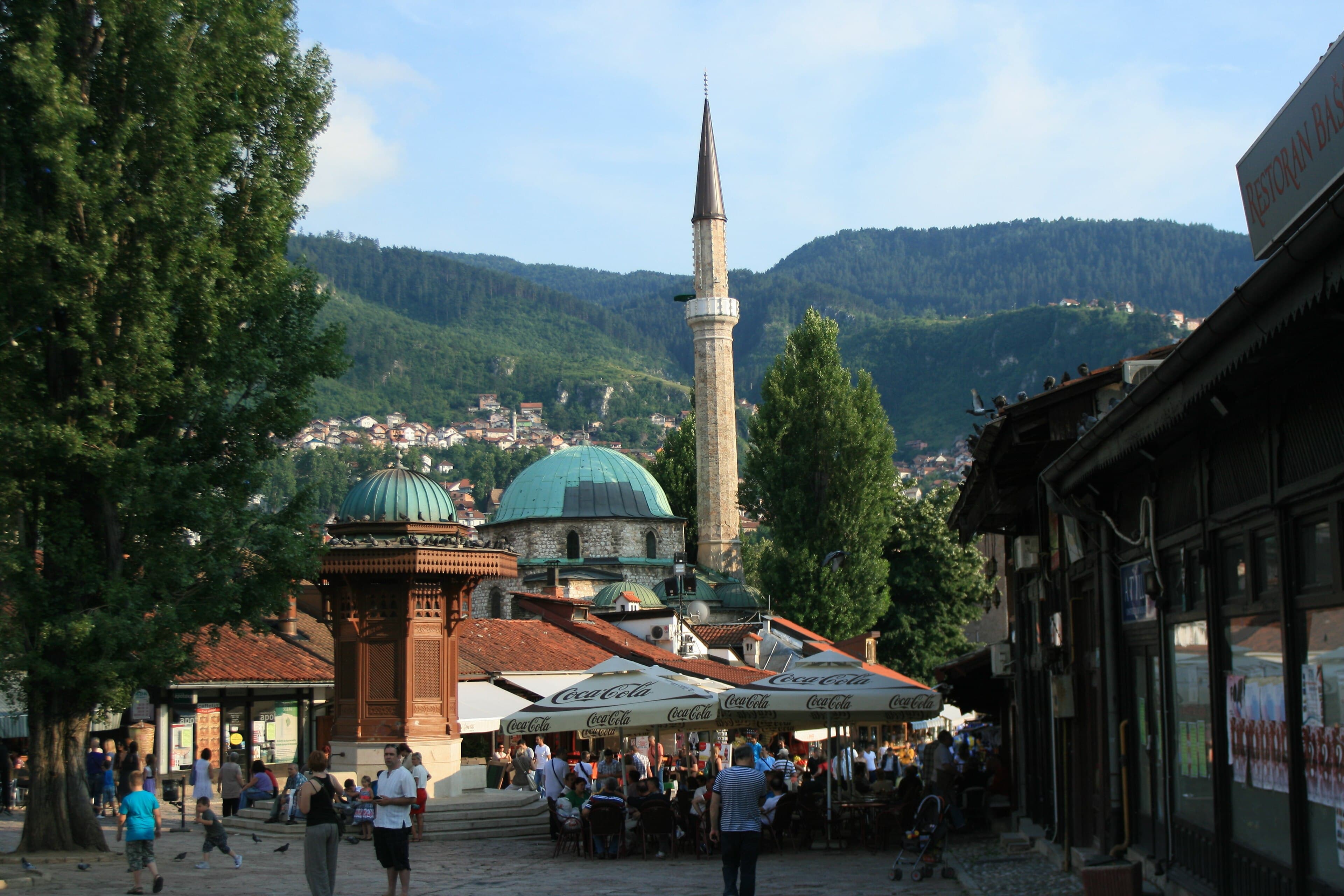
A day for Sarajevo: Baščaršija, coffee, craft and time around the table, with room to explore independently. Any workshop visit or local expert is confirmed in your proposal. Return to the same Sarajevo base.
Day 3The road to Jajce
Travel from Sarajevo to Jajce and settle in for two nights. This is an exploring and transfer day, with stops and time in Jajce shaped around the road journey. The route, access and visits are confirmed in your proposal.
Day 4Jajce and the Pliva
A day for Jajce and the Pliva landscape, with the waterfall, lakes and watermills shaping the plan. Specific visits and access are confirmed in your proposal. Return to the same Jajce base; the evening has room for your own plans.
Day 5South to Mostar
Travel south from Jajce to the Mostar region and settle into the final base for two nights. This exploring and transfer day leaves time for a first look at Mostar if the road and arrival timing allow. Stops and visits are confirmed in your proposal.
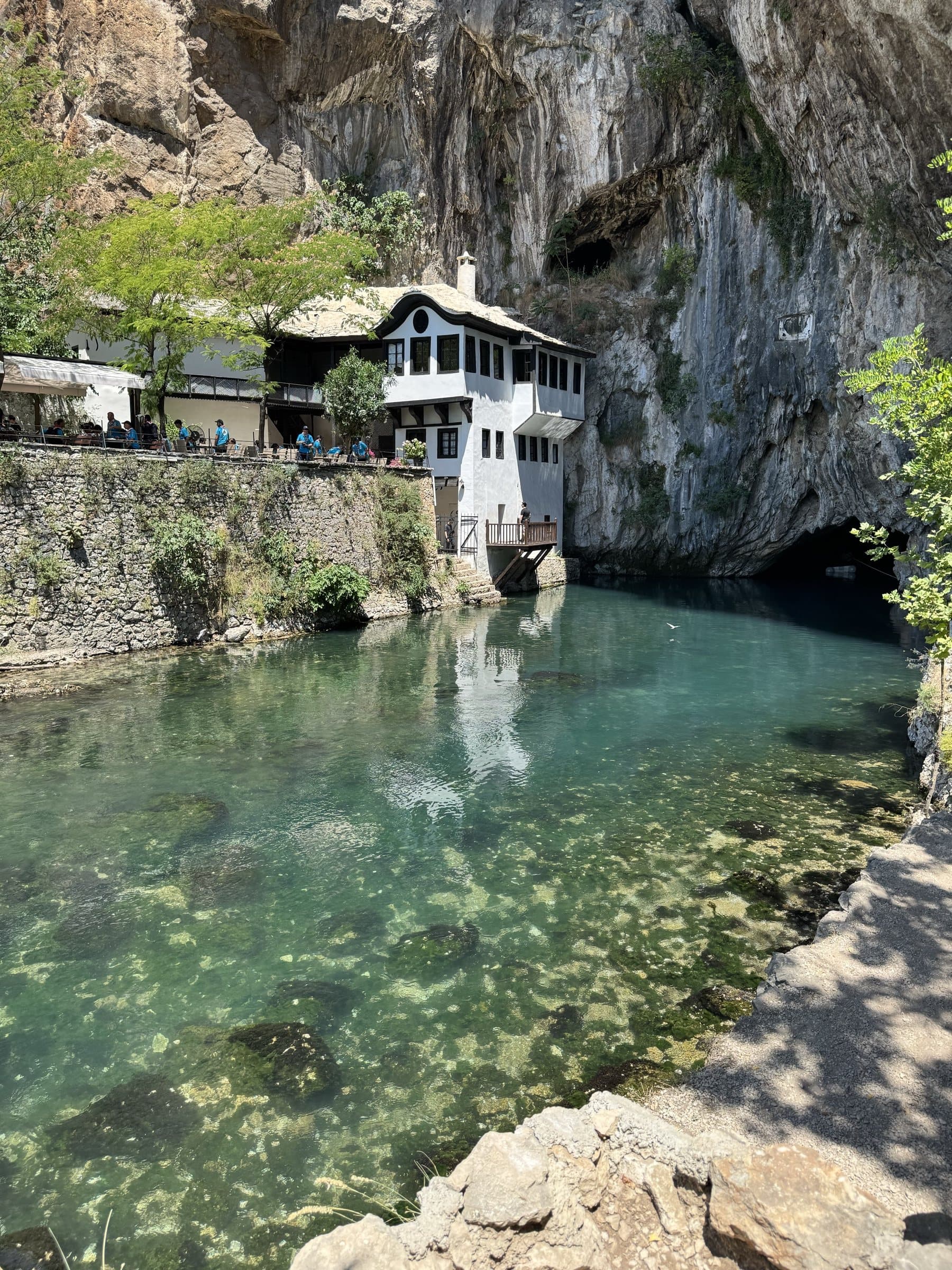
Day 6Mostar, Blagaj and the Buna
The fifth exploring day brings together Mostar and Blagaj, the Old Bridge and the Buna, with specific visits agreed in your proposal. A planned farewell table closes the journey. Departure has its own day tomorrow.
Day 7Breakfast and onward
Breakfast and departure, with timing and transport agreed before booking. No essential sightseeing is scheduled today.
The planned route begins in Sarajevo and ends in the Mostar region. Arrival airport, departure airport, flight timings and all transport arrangements must fit the route and are agreed in your proposal before booking. A return flight from Sarajevo requires a longer departure transfer. The seven days run from arrival on Day 1 to departure on Day 7. International travel before arrival is outside this count.
What’s included / not included
Included
- Six planned nights across Sarajevo, Jajce and the Mostar region, two at each base
- Your hosts, Virginia and Senad, with private time built in
- All guided experiences — local experts where a visit calls for one
- A planned farewell table; an optional welcome table if arrival times allow
- One local encounter around craft, food, or wine
Not included
- International flights
- Travel insurance
- Personal purchases
Price
Private journey price on request
Your proposal sets out the total group price, accommodation, included experiences, and transport arrangements before you book.
Payment terms are set out in the proposal too. You book only once you accept it.
Stay a little longer.
If you would like more time in Sarajevo, Jajce or Herzegovina, tell us when you inquire. Additional nights can create more time between the road days, subject to arrangements confirmed in your proposal.
Hosted by the owners
Hosted by Virginia and Senad, in English, French, and Bosnian. They open each door, then step back; some tables are hosted, some are yours alone.
Meet your hostsThe plant thread
The southern stretch carries a light plant thread: wild sage and immortelle in the Herzegovinian landscape around the Buna.
From the Journal
Read the chapters this journey is drawn from.
FAQ
How much walking is there, and what fitness do I need?
There is no hiking in the planned journey: nothing steep, nothing long, nothing that needs equipment. Old towns still mean cobbles and some steps, and Blagaj's tekke has stairs inside and asks for modest dress. Tell us about everyone's comfort and access needs when you inquire, and we will say honestly what the days involve.
We are travelling alone or as a couple. Can we join?
The journey is for a private group of four to six. If you are travelling alone or as a couple, ask us about a shared departure, and we will write when one is set.
Are dietary needs accommodated?
Yes. Tell us when you inquire, and we plan the tables around them.
When does the Water Road run?
Late May to mid-June, and September. We avoid mid-July to late August, when Mostar and Blagaj routinely reach 38–40°C. Dates are agreed with each group within those windows and confirmed in your proposal.
38–40°C in the Herzegovinian south from mid-July to late August is exactly why the calendar looks the way it does.
Where do we stay?
Two nights in Sarajevo, two in the Jajce area and two in the Mostar region. There are three planned bases and two hotel changes. Properties are being confirmed; your proposal names each one and sets out room arrangements before you book.
How do arrival and departure work?
Day 1 is for arrival in Sarajevo; Days 2–6 are for exploring, with inter-base transfers on Days 3 and 5; Day 7 is for departure from the Mostar region. Airports, flight timings and transport are agreed before booking. Returning to Sarajevo for a flight requires a longer departure transfer. International travel before arrival is outside the seven-day count.
Can we stay longer?
Yes. Additional nights in Sarajevo, Jajce or Herzegovina can create a slower journey. Tell us when you inquire, and we will discuss what is possible around your dates.
Which languages are you hosted in?
Your hosts speak English, French, and Bosnian.